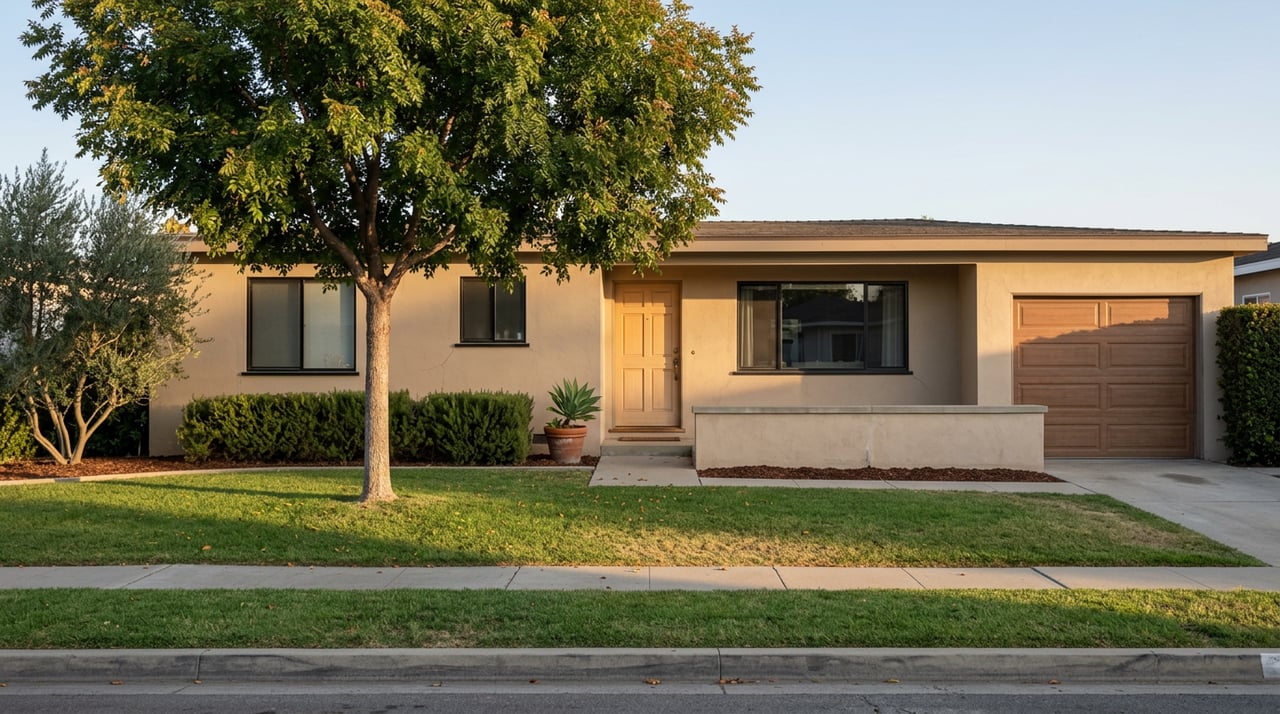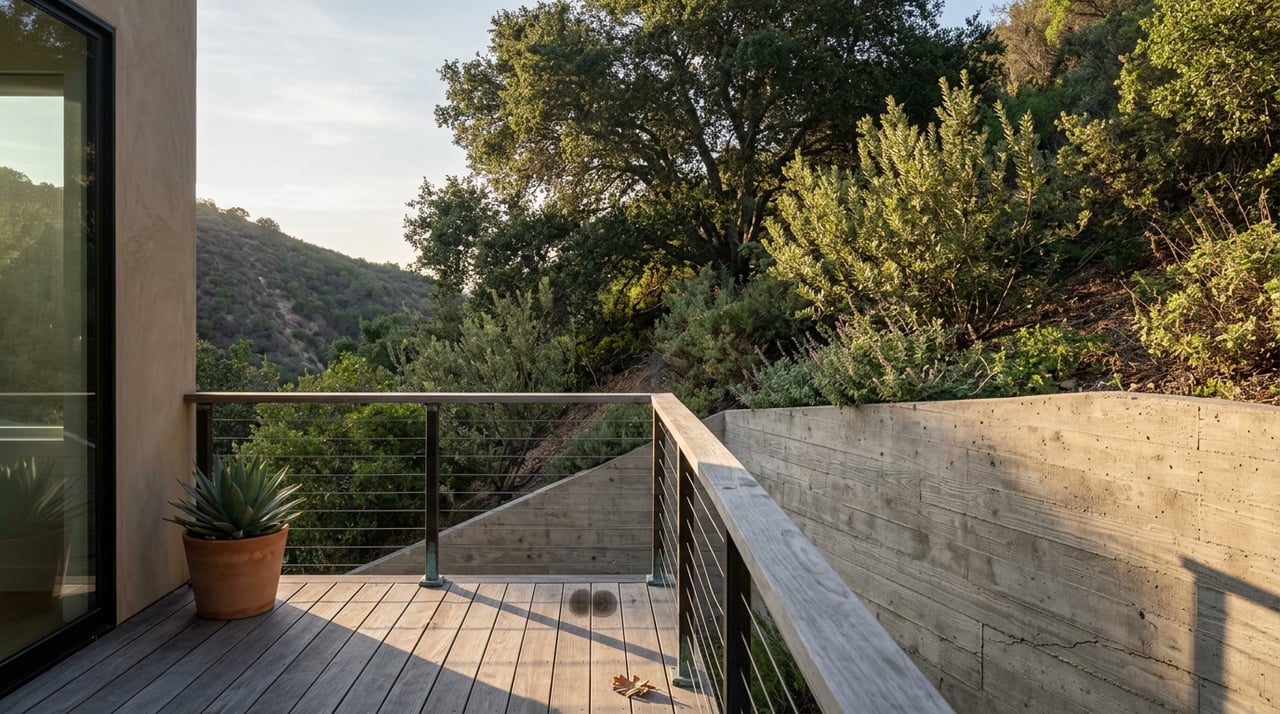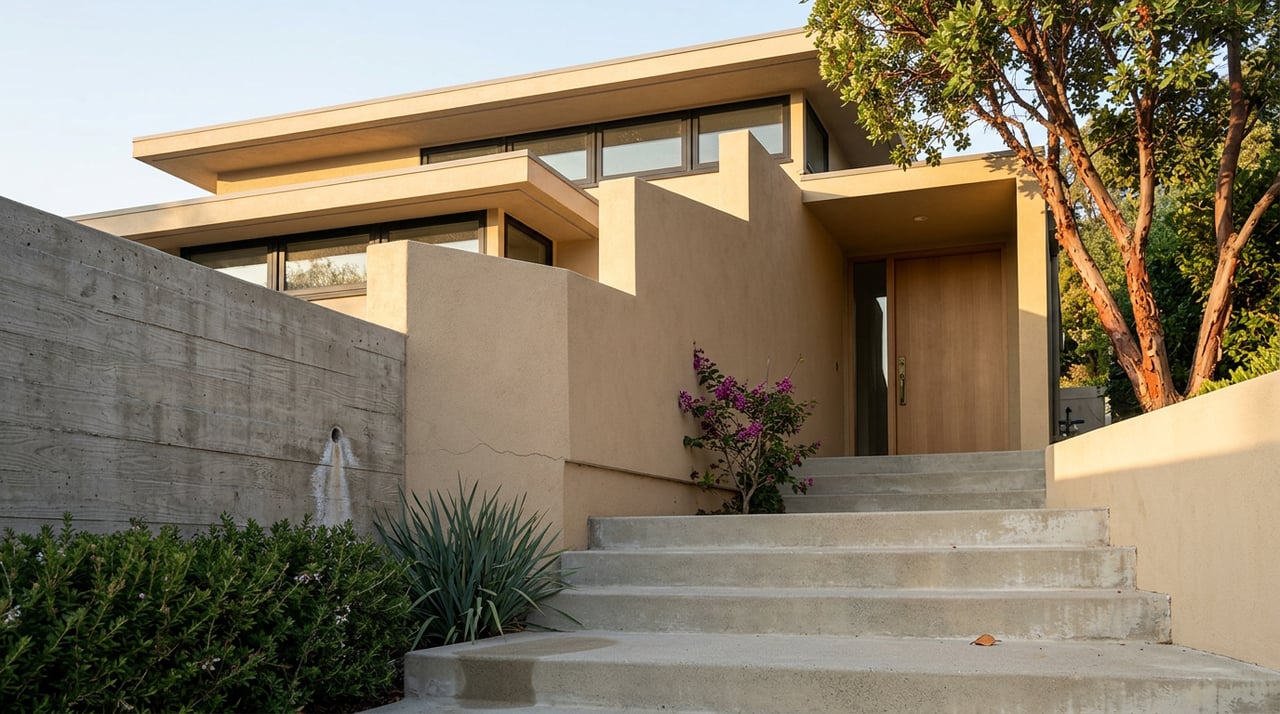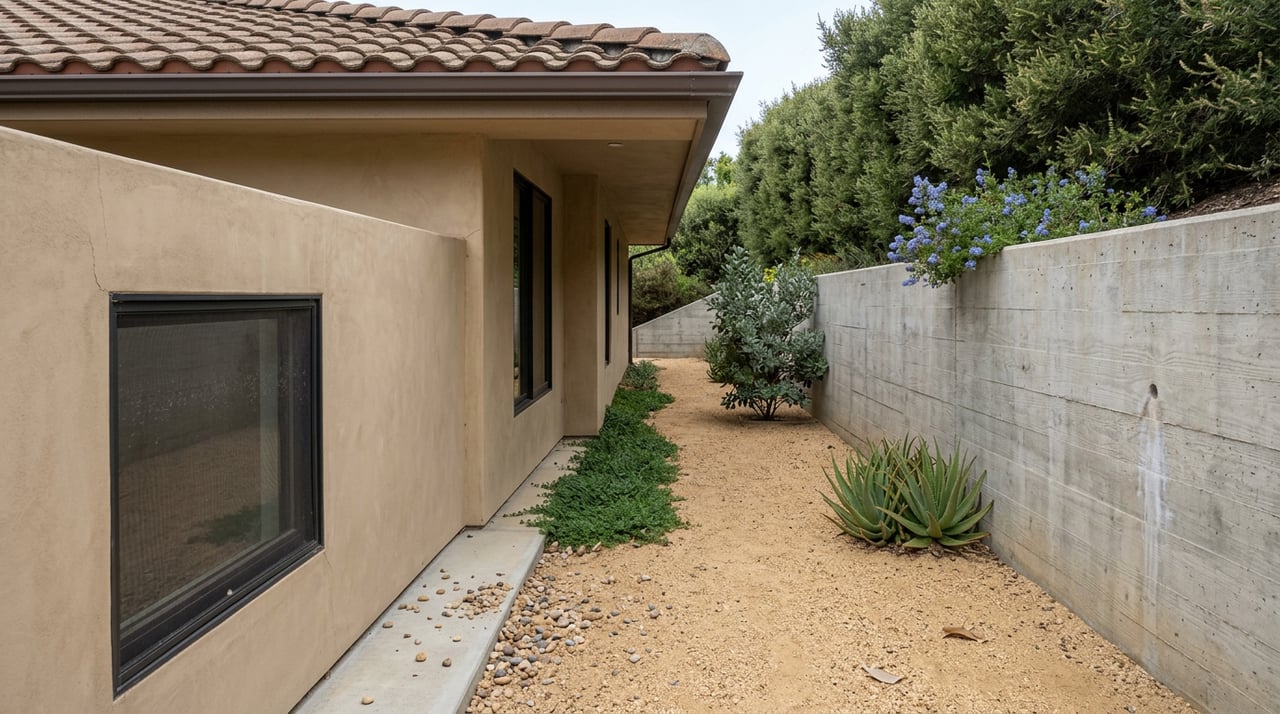
A Hollywood Hills market guide published within the past week lists what buyers should line up before they remove contingencies on a canyon or ridge property. The first item on that list isn't the general inspection. It's a preliminary insurance quote, requested before the buyer even schedules an inspector.
That ordering is the tell. The obvious story about Hollywood Hills real estate in 2026 is that fire risk makes insurance expensive. The real story, the one that actually explains why homes are sitting on the market longer, is that insurance now takes longer to place than most escrow calendars allow for. The premium isn't what's killing deals. The clock is.
What 96 Days on Market Is Actually Measuring
Three portals reported three different numbers for Hollywood Hills this year, and none of them agree with each other. Redfin put the median sale price at roughly $1.7 million for the three months ending May 2026. Movoto reported a $1,795,000 median sold price for June 2026. Realtor.com's median list price sat lower, around $1,690,000, for the same stretch. Different boundaries, different property mixes, different methods. None of them is wrong, exactly. They're just not measuring the same market.
What all three sources do agree on is the slowdown. Redfin's average days on market for the three months ending May 2026 came in at 96 days, up from 56 in the same window a year earlier. Movoto's June 2026 figure showed 70 average days on market, up from 55 in its comparison period. That's not a small drift. That's a market where the typical listing takes close to twice as long to close as it did twelve months ago.
A slower market usually gets blamed on price resistance. But the properties slowing down hardest are hillside single-family homes on canyon streets, which happen to be exactly the properties where insurance placement is hardest right now. The days-on-market number is tracking the insurance clock at least as much as it's tracking buyer appetite for the price.
Which Hollywood Hills You're Actually Buying Into
Part of why the price data is so noisy is that "Hollywood Hills" isn't one market. A broader Zillow-tracked boundary put the average home value at $1,953,972 as of May 2026, down 1.3 percent year over year, with a median sale price of $2,106,667 and a median list price of $2,498,000. That figure blends modest homes near the Cahuenga Pass with view estates in the Bird Streets that list into eight figures, which means the average tells you almost nothing about any specific street.
What matters more than the average is which side of a fire hazard boundary a given parcel sits on. Canyon streets and ridge-adjacent lots near Mulholland, the kind that define Laurel Canyon, Beachwood Canyon, the Bird Streets, Outpost Estates, Hollywood Dell, Hollywoodland, and Whitley Heights, commonly fall inside a Very High Fire Hazard Severity Zone under CAL FIRE's current mapping. That designation triggers a Natural Hazard Disclosure at sale and, more practically, determines which insurance carriers will even quote the property. The flats closer to Cahuenga Pass generally sit outside that zone and keep more standard-carrier options open. The distance between those two markets, in terrain and in insurability, is a bigger factor in how long a listing sits than the number on the sign.
The Three Paths to Coverage, and What Each One Actually Gets You
| Coverage path | What it covers | Typical annual cost | The catch |
|---|---|---|---|
| Admitted carrier (standard HO-3) | Dwelling, liability, theft, water damage | $2,000 to $4,000 | Increasingly hard to bind on canyon and ridge parcels in a Very High Fire Hazard Severity Zone |
| California FAIR Plan | Fire, lightning, internal explosion, and smoke only, on a named-peril basis | $5,000 to $10,000 for the fire piece alone | Requires a separate Difference in Conditions policy for liability, theft, and water; the policy isn't bound instantly the way an admitted carrier's can be |
| Surplus lines carrier | Comprehensive coverage, often the only full option in high-risk hillside zones | $8,000 to $15,000 or more | Not rate-regulated and not backed by the state guaranty fund that protects admitted-carrier policyholders |
The FAIR Plan exists as the state's insurer of last resort, and you don't shop for it the way you'd shop for a standard policy. You land there after a documented search of the regular market comes up empty, and a broker submits the application on your behalf. You can apply directly through the plan at cfpnet.com, but the point that matters for a buyer in escrow is timing: issuance takes real processing time, and roughly half of FAIR Plan customers end up buying a supplemental Difference in Conditions policy to cover what the fire-only plan leaves out, according to a Stanford research team's analysis of loan-level insurance data through March 2026. That same analysis found average California homeowners premiums rose 84 percent between the end of 2020 and March 2026, and that the FAIR Plan now backs about one in every 17 new single-family mortgage originations statewide.
The Part That Actually Stalls a Closing Date
Here's the mechanism that a lot of buyers don't see coming. Most people start shopping for insurance once their lender formally asks for it, which is often inside the final two weeks of escrow. On a flatland home with standard coverage available, that's usually enough time. On a canyon parcel where the path runs through a FAIR Plan application plus a separate DIC policy, or through a surplus lines broker shopping multiple non-admitted markets, two weeks can simply run out. In 2026, roughly 13 percent of California real estate agents reported losing at least one transaction because a buyer couldn't secure acceptable insurance before closing, nearly double the share who reported the same problem the year before.
The fix isn't complicated, but it has to happen earlier than most purchase contracts assume. Buyers on hillside parcels should be contacting an admitted carrier, a surplus lines broker, and the FAIR Plan at the same time, ideally before the offer goes in, and building a specific dollar ceiling into the purchase agreement itself. A workable version of that language reads something like this:
"Buyer may cancel this agreement if acceptable homeowners insurance cannot be obtained for less than $X per year."
That clause gives a buyer a documented, defensible exit if the numbers come back too high, instead of discovering the problem during the week the lender is supposed to be funding the loan.
What Changes at the Bird Streets Price Point
The insurance squeeze isn't landing evenly across price tiers. A Bloomberg News analysis published this July found that FAIR Plan residential policies grew 151 percent between September 2022 and March 2026, while the plan's total risk exposure jumped 234 percent to $700 billion over the same period. Nine zip codes statewide, out of more than 1,700, account for about 7 percent of that exposure, roughly $44 billion as of September 2025, and wealthy hillside communities carry a disproportionate share of it. In Calabasas, a canyon community not far from the Hollywood Hills market, FAIR Plan liability exposure spiked 46 percent between 2024 and 2025 alone.
Higher-end Hollywood Hills sales carry a second cost layer that flatland buyers don't face. Los Angeles' Measure ULA transfer tax thresholds moved to $5.4 million and $10.9 million effective July 1, 2026, which mainly affects Bird Streets and Sunset Plaza transactions rather than the lower-priced flats. Combined with surplus lines premiums that can run into five figures a year, the real carrying cost on a top-tier canyon estate now includes line items that didn't exist, in this form, three years ago.
The Ordinance That Matters After You Close
If your plan for a hillside purchase includes any expansion, the Baseline Hillside Ordinance in the Los Angeles Municipal Code caps cumulative grading at 500 cubic yards plus 5 percent of lot size on parcels with a natural slope of 15 percent or greater. That cap sits alongside, not instead of, the fire-hardening work insurers increasingly expect: Class A roofing, ember-resistant vents, and defensible space clearance. A buyer weighing remodel plans on a steep lot is really weighing two separate constraints at once, one governing how much dirt you can move and one governing whether a carrier will write the policy at all.
Before You Write the Offer
- Get preliminary quotes from an admitted carrier, a surplus lines broker, and the FAIR Plan before your contingency period starts, not after.
- Ask the seller for existing insurance declarations pages and documentation of any completed hardening work.
- Put a specific dollar ceiling on your insurance contingency rather than a vague "subject to insurability" clause.
- Bind coverage as soon as your offer is accepted instead of waiting for your lender's request.
- Treat the annual insurance line as part of your purchase price ceiling, not an afterthought you'll sort out once you qualify for the mortgage.
A Few Direct Questions
Does a FAIR Plan policy satisfy my lender? For the basic dwelling requirement, yes. But because it only covers fire, lightning, explosion, and smoke, most buyers still need a Difference in Conditions policy to cover liability, theft, and water damage the way a standard policy would. The California Department of Insurance maintains a list of carriers that write DIC coverage.
Are the flats near Cahuenga Pass affected the same way as the canyon streets? No. Parcels outside a Very High Fire Hazard Severity Zone generally keep more admitted-carrier options open, which is part of why price and days-on-market data for "Hollywood Hills" as a whole can be misleading without knowing exactly which streets you're comparing.
What if I can't get insurance before my closing date? An inability to obtain acceptable coverage at a reasonable cost is a legitimate reason to exit a purchase agreement during the contingency period, which is exactly why the clause matters more than the quote itself.
California lawmakers are responding to the broader crisis on a few fronts. Governing reported this year that Senate Bill 495 will require insurers to advance at least 60 percent of a policyholder's personal property coverage, up to $350,000, before a complete inventory of losses is filed, up from the previous 30 percent and $250,000 cap. A companion bill, Assembly Bill 226, is aimed at keeping the FAIR Plan solvent after the plan faced roughly $4 billion in losses following the January 2025 Los Angeles fires and needed a $1 billion bailout from private insurers to keep paying claims.
None of that changes the timing problem for a buyer in escrow today. It just confirms that the market is still adjusting, and that a canyon-street purchase in 2026 runs on a different clock than it did even two years ago.
If you're weighing an offer on a Hollywood Hills canyon or ridge property, or trying to figure out what a specific parcel's fire zone status means for your insurance timeline, Cindi Brodack can help you build a due-diligence schedule that accounts for it before you're two weeks from closing and still waiting on a binder. Let's Connect.